
Prepared by the Editorial Department
The global competition for advanced technology entered a new phase with the European Commission’s announcement, on November 25, 2026, of a proposal for a new law called the Quantum Act. It aims to turn European research in quantum technology into industrial and commercial capabilities and strengthen the continent’s independence in one of the sectors most critical to the future of the economy and digital security.
The proposal is not limited to supporting the manufacture of quantum computers. It also covers quantum communications, ultra-precise sensors and advanced measurement technologies, alongside the development of encryption systems capable of meeting the challenges quantum computers may pose in the future.
The proposal also lays the groundwork for a new investment fund called the Sovereign Tech Equity Fund, which aims to provide equity investment for critical technologies, particularly quantum technology.
This step reveals that Europe views quantum computing as a matter of industrial sovereignty and national security, not merely a field of scientific research within universities and laboratories.
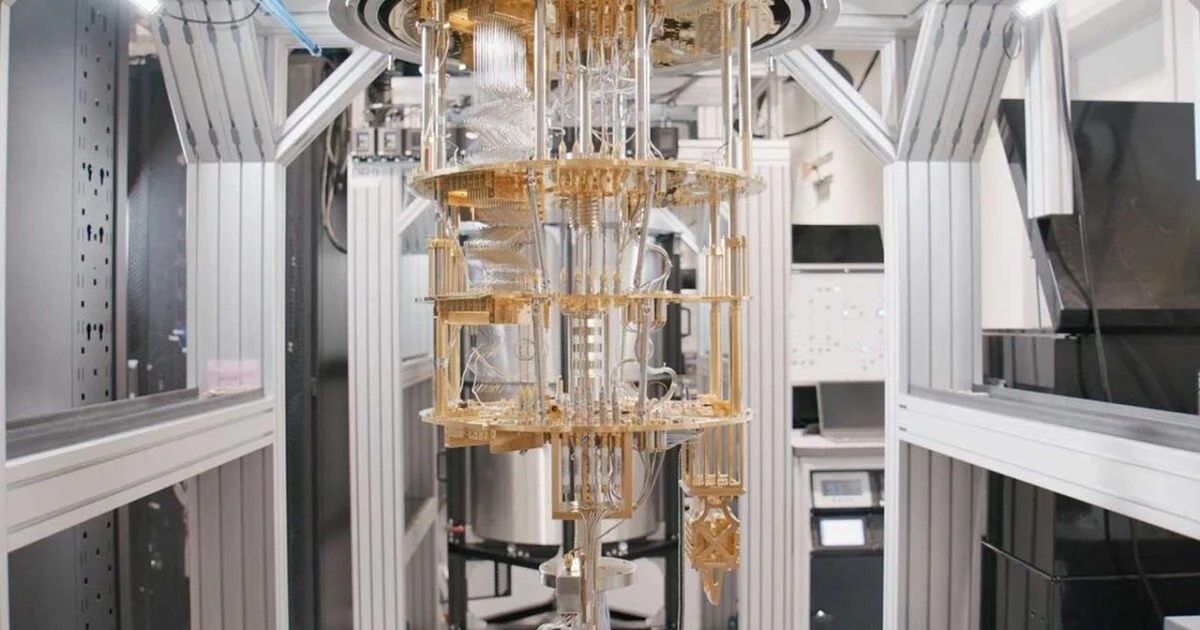
What is quantum computing, and how does it differ from traditional computing?
Traditional computers rely on units of information called bits, whose value is either zero or one.
Quantum computers, mean while, use units called qubits, which harness the properties of quantum mechanics, such as superposition and quantum entanglement.
These properties make it possible to represent and process information states in ways that differ fundamentally from traditional systems.
But this does not mean that a quantum computer is faster than a traditional computer at every task.
Potential quantum advantage is associated with specific problems, such as certain chemical and physical simulations, some optimization problems and mathematical calculations, which can be extremely complex for traditional systems.
Building a reliable quantum computer, however, requires overcoming major problems, chief among them noise, errors and the loss of quantum coherence. These factors make pre serving and processing information accurately an engineering and scientific challenge.
That is why research into quantum error correction and the construction of systems capable of reliably carrying out long and complex operations is so important.

Why is Europe moving now?
The European Commission recognizes that having scientific knowledge is not enough to ensure global competitiveness.
European universities may have advanced research, but turning it into industrial products requires specialized factories, suppliers, engineers, investment and infrastructure.
The Quantum Act therefore aims to address the gap between laboratories and markets through three main pillars:
Pillar one: research excellence
This focuses on connecting researchers and scientific institutions, strengthening quantum excellence networks, and supporting research into error correction and post-quantum cryptography.
Pillar two: turning research into industry
This includes supporting infrastructure and strategic projects, establishing specialized centers to help companies develop and test quantum products, and facilitating small and medium-sized companies’ access to expertise and funding.
Pillar three: protecting systems and supply chains
This aims to secure critical components and equipment, monitor reliance on external suppliers, and accelerate the transition to post-quantum cryptography.
Through these pillars, the Commission seeks to build an integrated European ecosystem that can not only produce research but also manufacture, operate and market the technology.
A sovereign investment fund for advanced technology
One of the initiative’s key elements is laying the groundwork for the Sovereign Tech Equity Fund.
The fund matters because developing quantum technology requires long-term financing: moving from a laboratory prototype to a commercial product takes years of testing, development and manufacturing.
Companies in this field also need investment in equipment, chips, specialized materials, cooling systems and precision measurement.
The fund is linked to the concept of European technological sovereignty—that is, reducing reliance on external sources in sectors that can affect security, the economy and industrial capabilities.
The official document on the proposed law did not announce a final, specific figure for the fund’s capital. It would therefore be incorrect to treat figures circulating in the media as approved funding.
The greatest threat: Can quantum computers break current encryption?
The security aspect may be the most sensitive part of this shift.
A large part of communications and digital transactions security relies on mathematical encryption algorithms, including public-key encryption systems used for key exchange and digital signatures.
Some of these systems are based on the difficulty of certain mathematical problems for traditional computers, such as factoring large numbers into prime factors or solving discrete logarithm problems.
But a large, fault-tolerant quantum computer capable of operating reliably could run Shor’s Algorithm, which could theoretically threaten these cryptographic foundations.
This does not mean that quantum computers currently available can hack all communications or read all encrypted data.
Achieving broad practical quantum computing capabilities, however, still requires major advances in the number of logical qubits, the quality of error correction and operational stability.
But the strategic threat begins before that stage is reached.
The “harvest now, decrypt later” concern
One of the most serious scenarios discussed by cybersecurity experts is known as Harvest Now, Decrypt Later.
The idea is that an entity with access to encrypted data today could store it, then try to decrypt it in the future, when advanced quantum computers become capable of breaking some of the algorithms currently in use.
This scenario poses a greater risk to data that must remain confidential for many years, such as government and military information, medical records, financial files and intellectual property.
That is why European institutions are not waiting for powerful quantum computers to arrive before beginning preparations.
Instead, they are moving toward adopting Post-Quantum Cryptography, a set of algorithms designed to resist attacks that may be carried out by both traditional and quantum computers.
It is important to distinguish post-quantum cryptography from quantum cryptography: the former relies on mathematical algorithms that can run on traditional computers, while the latter uses the principles of quantum physics in some key-distribution and communications systems.
What does the law mean for banks, governments and companies?
If quantum computing becomes a broadly available practical capability, its impact will extend beyond technology laboratories.
Banks, payment institutions, telecommunications companies, governments, energy companies and transport companies all rely on interconnected cryptographic infrastructure to protect data, transactions and communications.
These institutions need to inventory the encryption systems they use, identify keys and protocols that may become vulnerable, and develop a gradual transition plan to the new algorithms.
Updating encryption is not simply a matter of changing software on one device. It may require changes to operating systems, servers, network equipment, applications, banking infrastructure and digital identity systems.
This is where supplier management becomes important, because some older equipment or embedded systems may not be easy to update.
Consequently, preparation for the post-quantum era must begin at the level of institutions and infrastructure, not when the first quantum-computing-related breach occurs.

Can Europe compete with the United States and China?
The United States has advanced quantum computing companies and laboratories, while China is investing heavily in quantum communications, research and specialized equipment.
Europe faces a dual challenge: maintaining its scientific lead and preventing technology, engineers and startups from moving to overseas markets that offer greater funding and broader commercial opportunities.
That is why the Commission is seeking to bring national programs together within a unified European framework and develop specialized centers and strategic industrial projects.
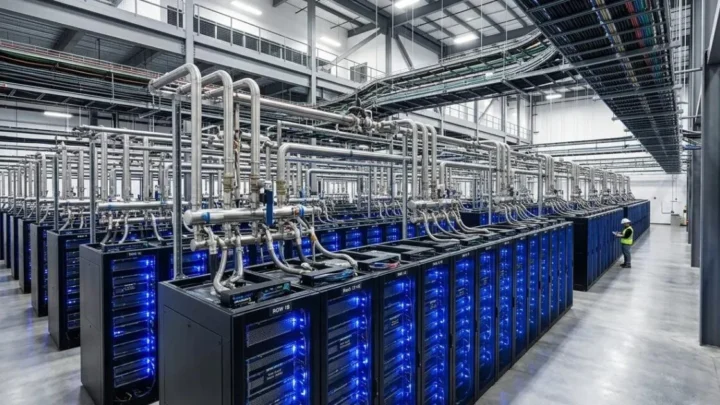
The initiative also builds on existing programs, such as the Quantum Flagship, which has a budget of one billion euros for research and development; the EuroQCI initiative for quantum communications; and the EuroHPC programs for high-performance computing.
The European strategy aims to strengthen the European Union’s global standing in quantum technology by 2030.
But turning this goal into reality requires more than legislation. It calls for sustainable funding, coordination among countries, and factories and laboratories capable of turning innovations into usable products.
What about Arab countries and Lebanon?
This shift represents an important opportunity for Arab countries seeking to develop their telecommunications, banking and scientific research sectors.
Entering the post-quantum era does not require owning a domestic quantum computer. It starts with upgrading digital and cryptographic infrastructure and building capabilities in information security, applied mathematics and advanced communications.
Lebanon, mean while, needs to begin assessing the readiness of its banking and government systems, data centers and telecommunications, and determine how heavily they rely on encryption protocols that may need future updates.
Lebanese universities can also strengthen research in cryptography, mathematics and computer science, and establish partnerships with specialized international institutions.
This issue should not be viewed as a technological luxury that can be postponed, because protecting data that must remain confidential for a long time requires early preparation.
Conclusion: The battle of the future is not only about who has the most powerful computer, but also about who can protect their data
The European Quantum Act proposal represents a strategic shift in how quantum technology is approached, as it brings together scientific research, manufacturing, investment and cybersecurity.
Most importantly, it places post-quantum cryptography among the priorities of European digital policy, at a time when practical quantum capabilities are still developing.
All encryption systems will not suddenly collapse as soon as a new quantum computer appears, but institutions that delay upgrading their security infrastructure may find themselves facing a complex and costly transition.
In this race, the advantage will not belong only to those who possess the technology, but also to those who prepare early to protect the communications, systems and data on which the digital economy depends.
References:
- European Commission, Quantum Act Proposal, November 25, 2026.
- European Commission, Quantum Act Factsheet, November 2026.
- European Commission, Quantum Europe Strategy.
- NIST, Post-Quantum Cryptography Standards.
- European Commission, EuroQCI Programme.
- European High Performance Computing Joint Undertaking, EuroHPC.