

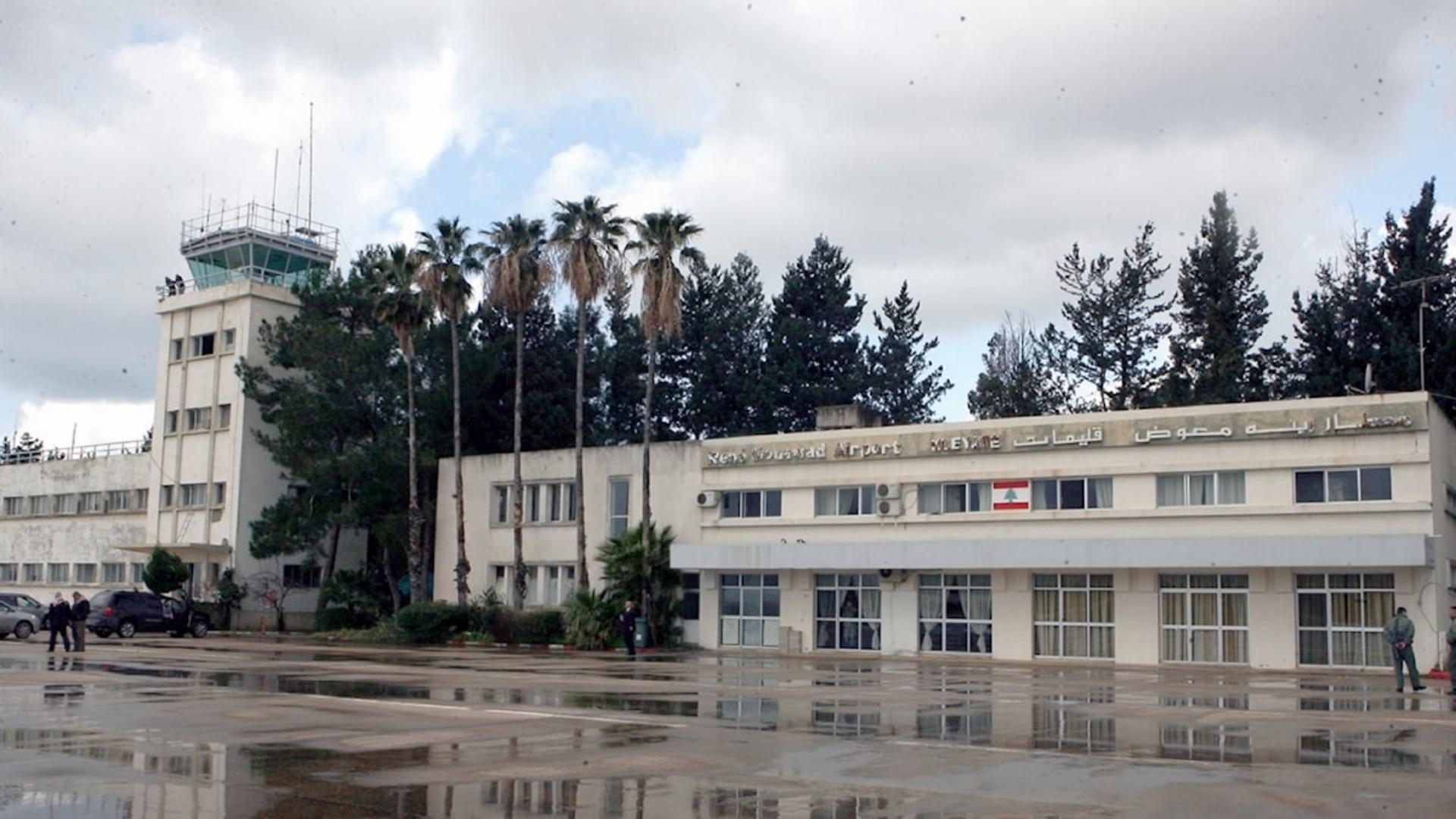
Rene Mouawad Airport in Qleiaat, Akkar Governorate, is moving closer to resuming its civilian role after many years without regular commercial flights. The project offers northern Lebanon a new opportunity to restore direct air links with the outside world and has opened an economic debate about the future of transport, tourism and investment in the region.
Prime Minister Nawaf Salam announced that regular commercial flights would begin on 14 December 2026, following a series of technical and operational measures, including rehabilitation of the runway, navigation systems and facilities required to operate the airport in accordance with international safety standards.
But the most significant development on 22 November was not the announcement of a completed test flight, as the initial schedule might suggest. Rather, it was the start of technical calibration and operational testing of the navigation and visual-aid systems, according to a joint statement by the Ministry of Public Works and Transport and the Directorate General of Civil Aviation.
This distinction matters because moving from rehabilitation work to commercial operations does not happen simply by setting a political or administrative date. It requires completing a series of technical inspections and regulatory approvals.
What happened on 22 November?
The Ministry of Public Works and Transport and the Directorate General of Civil Aviation announced the start of technical calibration and testing of the air navigation and visual-aid systems at Qleiaat Airport.
The work included testing the Precision Approach Path Indicator (PAPI), which helps pilots determine the correct approach angle when landing, as well as approach and landing procedures and air traffic management in the area around the airport.
The statement said additional flight inspections would be conducted after engineering rehabilitation work on the runway had been completed and technical-readiness requirements and operational safety standards had been met.
The two ministries confirmed that the project had moved from the planning stage to actual engineering work, and that it was being carried out in accordance with International Civil Aviation Organization (ICAO) standards, particularly Annex 14, which concerns the design and operation of airports.
Therefore, the start of technical calibration does not mean the airport is ready to receive commercial flights. It is one step in an approval and operational process that still has stages to complete.
Seven weekly flights to three capitals
On the commercial front, Mada Aviation announced an initial schedule of seven weekly round-trip flights linking Qleiaat with three regional destinations.
The schedule includes:
- Cairo: Two weekly flights to Sphinx International Airport, on Sundays and Thursdays.
- Istanbul: Three weekly flights, on Mondays, Wednesdays and Fridays.
- Amman: Two weekly flights to Queen Alia International Airport, on Tuesdays and Saturdays.
The company said bookings are expected to open on 1 December, subject to final approvals from civil aviation authorities and compliance with international standards.
The first commercial flight is scheduled for 14 December, according to the date announced by the prime minister.
But a distinction must be made between the initial schedule announced by the company and the officially approved flight schedule: regulatory and technical approvals remain essential conditions before tickets can be sold and regular flights operated.
From military base to civilian airport
Qleiaat Airport is not a new facility. It was a military air base that remained outside regular civilian use for decades, despite earlier attempts to turn it into an airport serving the northern regions.
The airport is named after the late President Rene Mouawad, who was assassinated in 1989 after being elected president of the republic.
Its location is significant because it is in Akkar Governorate, near the Syrian border and the northern coast, making it capable of serving travelers who currently have to travel to Beirut’s Rafic Hariri International Airport.
Rehabilitation began in June 2026, after a four-year transitional contract was awarded to Sky Lounge Services, a company specializing in ground handling and private aviation services.
According to a Reuters report published on 25 November, the company will invest between $5 million and $6 million in the project, while the government is working to improve the roads around the airport to make it easier to reach.
Can the airport change Akkar’s economy?
Akkar is among the areas most in need of investment, employment opportunities and infrastructure. More than 300,000 people live there, according to estimates cited by Reuters.
For that reason, reopening Qleiaat could have an economic impact extending beyond the aviation sector.
A civilian airport could encourage the development of hotels, restaurants, transport companies, tourism and logistics services, and create jobs in operations, maintenance, security, ground handling and other ground services.
It could also provide a closer air gateway for residents of Akkar, Tripoli and other northern areas, reducing some of the time and expense associated with traveling to Beirut.
Connections to Cairo, Istanbul and Amman are especially significant given those cities’ economic and tourism roles, as well as their trade, educational and medical ties with Lebanon.
But the actual impact will depend on flight regularity, fares and the ability to attract additional airlines—not on the airport’s opening alone.
Ambitious figures and operational challenges
The National quoted the operating company’s chairman, Zia al-Manna, as forecasting that the airport would attract about 113,000 passengers in its first year, with the possibility of reaching 600,000 in its fourth year.
Reuters also reported that the company expects the project to generate up to about $20 million in revenue for the government over four years.
These are figures and forecasts from entities involved in the project, not realized operational results or financial guarantees.
For these forecasts to become achievable, a number of challenges must be addressed:
- Complete rehabilitation of the runway, taxiways and aircraft parking stands.
- Approve the navigation and visual-aid systems.
- Complete safety and operational testing, as well as flight inspections.
- Secure the necessary approvals from civil aviation authorities.
- Complete passport control, customs, security and ground-handling services.
- Provide suitable access roads, parking and public transport.
- Attract additional airlines and expand the network of destinations.
The airport’s proximity to the Syrian border also creates opportunities to serve travelers from neighboring Syrian areas, but this will depend on actual demand, border arrangements and regulatory policies.
Will Qleiaat become a competitor to Beirut Airport?
It would be inaccurate to view Qleiaat Airport as a full replacement for Rafic Hariri International Airport.
Each airport has a different geographic and operational scope, while Qleiaat’s capacity in its initial phase will depend on its destinations, number of flights, fleet size and available services.
The airport is more likely to serve initially as a complement to Beirut Airport, offering additional options for residents of the north and some travelers arriving from abroad.
As operations expand, air cargo services and additional regional flights could be considered, provided the necessary infrastructure, commercial demand and economic viability are in place.
Bottom line: The date has been announced, but success starts with safety and operations
Qleiaat Airport represents an important development opportunity for Akkar and the north, and potentially one of the most significant projects capable of reviving economic activity in the region.
But the challenge is not holding an opening ceremony or announcing a date for the first flight. It is completing technical certification, ensuring safe operations and regular flights, and building a network of destinations capable of attracting travelers.
If the state and the operating parties succeed in meeting these requirements, Rene Mouawad Airport could become a new economic gateway for Lebanon, rather than simply another facility on the aviation map.
Sources:
- Lebanese Council of Ministers, meeting on preparations for the opening of Qleiaat Airport.
- Ministry of Public Works and Transport and Directorate General of Civil Aviation, statement dated 22 November 2026.
- L’Orient Today, 18 November 2026.
- The National, 16 November 2026.
- Reuters, 25 November 2026.


