
November 25, 2026
Hezbollah Secretary-General Sheikh Naim Qassem’s speech on Wednesday evening was not merely a political response to President General Joseph Aoun’s Independence Day address. It contained indicators warranting a strategic reading that goes beyond the traditional political sparring, particularly amid mounting domestic and external pressure on the party.
The shift from criticizing the authorities’ performance to warning that patience is running out, and to signaling a readiness to defend the party’s existence and rights when danger draws near, raises a highly sensitive question: Is Lebanon approaching a political and security moment similar to the one that preceded the events of May 7, 2008?
And could the confrontation move beyond political pressure to an attempt to impose a new balance on the authorities?

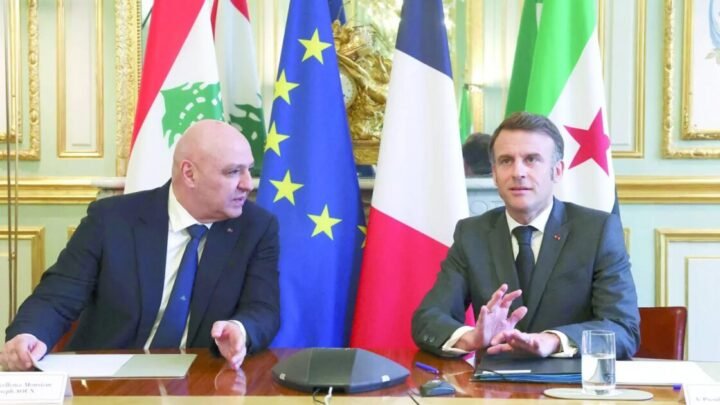
Official archival photo – KUNA
From political disagreement to an existential threat
The significance of Qassem’s speech lies in the choice of words and the context in which they were used.
The Hezbollah secretary-general did not limit his objections to Israeli attacks, but also addressed the performance of the Lebanese authorities, their decisions, security detentions and US pressure, arguing that some domestic policies serve Israeli objectives.
Speaking about these issues, he said:
“Our patience with injustice has limits.”
He linked the approach of danger to defending the party’s existence and rights.
In the fields of early warning and crisis management, a shift by an armed political actor from describing a dispute as political to framing it as a matter of defending its existence is considered an indicator worth monitoring, as it may reflect a change in the limits within which it is willing to allow the political confrontation to continue.
But this rhetorical shift is not, in itself, evidence that a decision has been made to engage in armed confrontation.

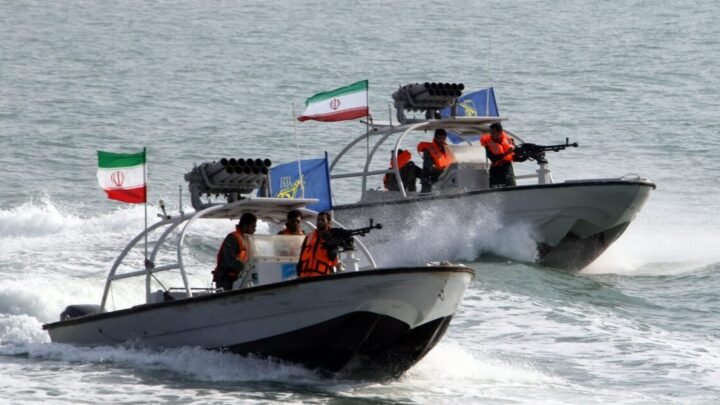
Archival photo – Getty Images via UltraSaw
May 7, 2008: When the dispute went beyond politics
On May 6, 2008, the Lebanese government made decisions concerning Hezbollah’s telecommunications network and the dismissal of Beirut airport’s security chief.
The party considered those decisions a direct attack on its security and military apparatus, and its secretary-general at the time, Sayyed Hassan Nasrallah, described the government’s position as a declaration of war on the resistance and its weapons.
The crisis escalated into internal armed clashes, before the government reversed its decisions and the Doha Agreement was signed on May 21, 2008, reshaping the political balance within the executive branch.
Those events did not amount to a conventional military coup that brought down the constitutional system, but they demonstrated the ability of armed force to influence government decisions and impose a new political settlement.
This is where the comparison with the current period becomes significant.
Are the conditions that preceded May 7 recurring?
There are a number of political similarities with the period in 2008, most notably:
- Growing discord between Hezbollah and the executive branch.
- The party’s view that some government and security measures are a direct attack on it.
- External pressure concerning weapons and military capabilities.
- An increasingly sharp tone toward state institutions.
- Warnings that the limits of patience are being reached.
- The overlap between the domestic conflict and the regional and international confrontation.
However, current military, political and regional conditions differ from those in 2008, making a repeat of the previous scenario uncertain.
Hezbollah is also not facing the Lebanese authorities alone in its political dispute, but operates within a regional environment in which the confrontation with Israel, Iranian-US relations and international pressure intersect.
Detainees from Dahr al-Baidar and Batroun: A sensitive test of relations with the state
The issue of detainees emerged as one of the most sensitive topics in Qassem’s speech.
His call for the release of detainees from Batroun and his defense of the activities of detainees from Dahr al-Baidar reflect his objection to the security and judicial authorities’ handling of these cases.
The Lebanese government, mean while, maintains the prerogatives of the state and its judicial and security institutions, as well as the principle of a state monopoly on weapons.
Prime Minister Nawaf Salam had affirmed at a Cabinet session on October 22, 2026, that the state monopoly on weapons is grounded in the Constitution, Lebanese laws, the Taif Agreement and international resolutions.
As a result, continued disagreement over these issues could turn them from security and judicial cases into a broader political crisis between the party and the authorities.
Potential strategic scenarios
Scenario one: Politically containing the crisis
Media and political escalation continues, while channels of communication remain open and understandings are reached to prevent the confrontation from spilling into the streets.
Scenario two: A government and constitutional crisis
The dispute intensifies, leading to a paralysis of government decisions or a crisis within institutions, potentially culminating in calls to reconsider the policies in place.
Scenario three: An internal security confrontation
Security and judicial disputes escalate, leading to domestic unrest or limited clashes, with the risk of wider violence if political mediation fails.
Scenario four: A new May 7
The confrontation shifts from political objection to the use of armed force to compel the authorities to reverse decisions that Hezbollah considers a direct threat to its security or existence.
If this scenario materializes, Lebanon could find itself facing a national crisis that forces a renegotiation of the political and security balance.
Scenario five: An attempt to change the authorities by force
This scenario would represent a more dangerous shift, going beyond pressure on the government to an attempt to change the authorities or disrupt the constitutional system by force.
However, the publicly available information as of the evening of November 25, 2026, does not establish that preparations for a coup are under way or that a decision has been made to overthrow the authorities.
Early warning indicators to monitor
From an open-source intelligence (OSINT) perspective, the following indicators should be monitored in the coming period:
- The nature of the official response from the presidency and the prime minister’s office.
- Government decisions concerning Hezbollah’s weapons.
- Judicial developments in the detainee cases.
- Whether communication channels between the party and state institutions remain open or are severed.
- A shift in political rhetoric from conditional warnings to a declaration of confrontation.
- Public calls for large-scale protest movements.
- Official positions taken by the Lebanese army leadership.
- Regional developments and the course of Iranian-US relations.
- The continuation of Israeli attacks and their impact on domestic stability.
No single indicator can be considered conclusive evidence that a confrontation is imminent. Rather, indicators should be assessed in terms of their accumulation, interconnection and development over time.

Sheikh Naim Qassem during a televised address. Archival photo – L’Orient Today
Was the speech a deterrent message to the authorities?
Qassem’s speech can be interpreted as an attempt to set political limits on measures the party considers an attack against it, and to inform domestic and external parties that continued pressure could have repercussions beyond the political confrontation.
At the same time, Qassem affirmed his commitment to civil peace and national unity, as well as his support for the army, while leaving the door open to domestic understanding.
This means the speech combines warning with negotiation, without explicitly announcing a decision to engage in domestic confrontation.
Strategic conclusion
Lebanon faces an extremely delicate equation: an authority committed to the state monopoly on weapons and the implementation of its decisions, and an armed party that considers some of these measures, amid the continued occupation and Israeli attacks, a potential threat to its security and existence.
The prospect of a repeat of May 7 cannot be ruled out in theory, but it is not inevitable; talk of a coup remains an unsubstantiated hypothesis.
Perhaps the greatest danger facing the country is one side misjudging the limits of the other, leading to an escalation that was not initially intended.
The question is no longer solely about the fate of Hezbollah’s weapons, but also about the ability of the state and political forces to manage this dispute without pushing Lebanon into a new internal confrontation.
Will the November 25 speech prove to be a warning ahead of a settlement, or a step toward a political and security explosion that redraws Lebanon’s balance of power?
The answer will be determined by the decisions and actions to come, not by speeches alone.