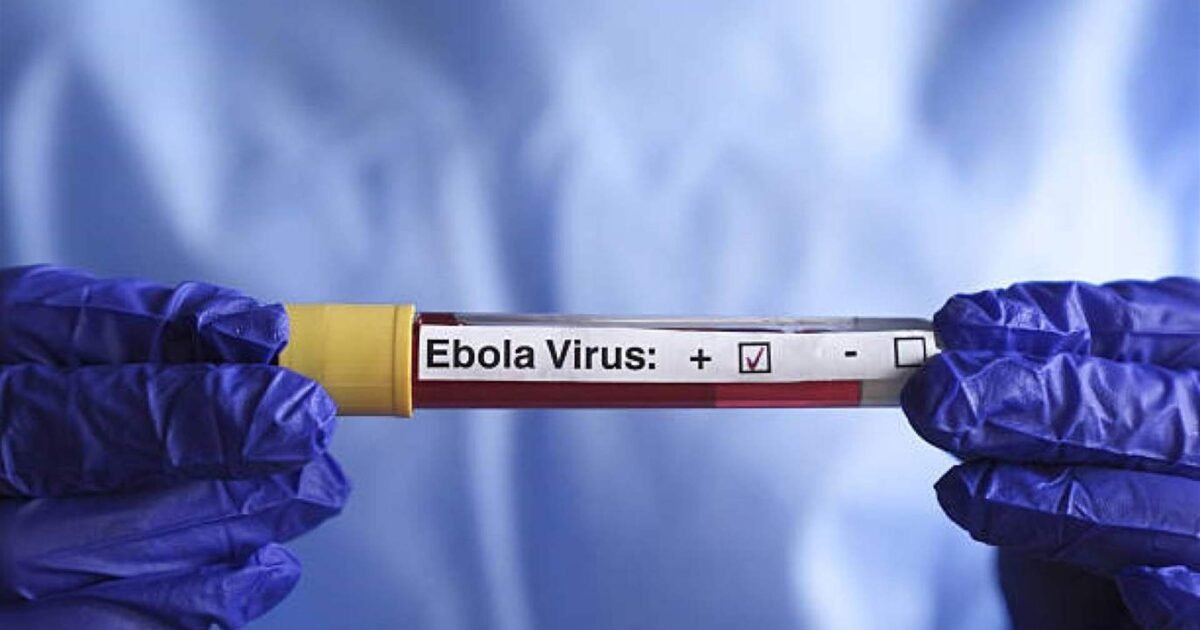
The Ebola crisis in the Democratic Republic of the Congo has entered a highly critical phase, six months after the outbreak was declared in May 2026, with hundreds of cases still being recorded weekly and the number of affected areas expanding, at a time when the health emergency overlaps with armed conflict, displacement and weakened medical infrastructure.
According to the latest World Health Organization update issued on 15 November 2026, the number of recorded infections has exceeded 11,000 cases, while deaths have surpassed 5,400. Health authorities continue to struggle to halt transmission, particularly in areas experiencing security disturbances and a reduced ability of medical teams to reach the population.
Hundreds of cases weekly and expansion of the outbreak
World Health Organization data indicate the outbreak has spread to 67 health zones across eight Congolese provinces, with between 400 and 500 new cases being recorded each week.
Al though health interventions succeeded in containing transmission in a number of initial hotspots, the disease continues to spread in other areas, reflecting the difficulty of controlling transmission chains amid weak surveillance systems and challenges in tracing contacts.
The seriousness of the figures is underscored by the rising fatality rate, alongside the continued discovery of cases outside the lists of known contacts of patients, which complicates efforts to identify sources of infection and contain its spread.
Children in the highest-risk group
One of the most worrying aspects of the current outbreak is the high proportion of infections and deaths among children.
The World Health Organization reports that children account for more than a quarter of confirmed cases and about a third of deaths. Its data indicate that seven out of ten children under five who were infected with the disease have died.
These indicators reveal the scale of the challenges facing the health system, especially in areas suffering from shortages of medical services and difficulty accessing treatment centers, where delays in diagnosis and care can worsen survival prospects.
Armed conflict obstructs virus control efforts
The crisis is not limited to the medical dimension; security conditions have become one of the main factors threatening containment efforts.
In eastern Congo, medical teams face increasing difficulties due to armed clashes and attacks on health facilities and health workers, which impede awareness campaigns, testing, contact tracing and transferring patients to treatment centers.
The World Health Organization warned that ongoing violence and displacement weaken the health response and make access to affected communities more difficult.
Fear, mistrust and misinformation may also lead some residents to avoid health facilities or conceal cases, increasing the likelihood of transmission within local communities.
Has Ebola reached other countries?
Concerns are no longer confined to the borders of the Democratic Republic of the Congo, after cases linked to the outbreak were recorded in a number of African countries.
Kenya and Nigeria have reported cases linked to the virus, Uganda recorded cases during stages of the outbreak, and a case linked to the crisis was also recorded in France.
These developments raise fears of cross-border transmission via population movements, travel and trade between countries, especially in border areas where continuous health surveillance is difficult to implement.
However, cases recorded in other countries do not necessarily mean widespread community transmission there; levels of risk vary depending on the nature of contacts and the ability of health authorities to isolate cases and trace exposed individuals.
What is the Ebola virus and how does it spread?
Ebola is a highly dangerous viral disease that is transmitted mainly through direct contact with an infected person’s blood, bodily fluids, tissues or contaminated instruments.
It is not usually airborne in the same way that influenza is; transmission requires direct contact with sources of infection.
Initial symptoms include fever, fatigue, headache, muscle pain and sore throat; the condition can progress to vomiting, diarrhea and abdominal pain, and in severe cases may cause internal or external bleeding and organ dysfunction.
The danger of the disease lies in the fact that its early symptoms can resemble other infectious illnesses, making laboratory diagnosis and the patient’s epidemiological history essential factors in confirming infection.
An additional challenge: a strain without an approved vaccine
The current outbreak is linked to the Bundibugyo virus, one of the types of Ebola virus.
One of the main medical difficulties is the lack of an approved vaccine or a specific targeted treatment for this strain so far, unlike some other Ebola strains for which dedicated vaccines and treatments exist.
Health authorities are working to strengthen supportive care for patients, including fluid and electrolyte replacement, monitoring of organ function, treatment of complications and secondary infections, along with strict infection prevention measures within health facilities.
Research is also underway to assess the potential use of vaccines developed against other strains, but their effectiveness against the Bundibugyo virus still requires scientific proof.
What does the world need to stop the outbreak?
Responding to the crisis requires international action that goes beyond providing medical supplies to include securing access for health and humanitarian teams to affected areas, strengthening laboratories and isolation centers, and expanding early detection and contact-tracing programs.
The World Health Organization emphasizes the importance of engaging local communities in the response, because the success of prevention and isolation measures depends largely on the population’s trust in medical teams and their adherence to health guidance.
Supporting health workers, securing medical facilities and protecting patient transport routes are also essential conditions for curbing the spread of infection.
A crisis that goes beyond Congo
The current Ebola outbreak reflects the interconnectedness of health emergencies, armed conflict and economic fragility, and confirms that combating epidemics does not rely on medical capacity alone but also requires security stability, international cooperation and sustainable financing.
With hundreds of cases still being recorded each week, the greatest challenge facing Congolese authorities and health organizations remains breaking the chains of transmission and reaching communities that are still outside the scope of effective medical response before the crisis expands to levels that are difficult to contain.