Maha Shhadeh at Global Education Summit 2026: Where AI, Human Potential and Education Meet
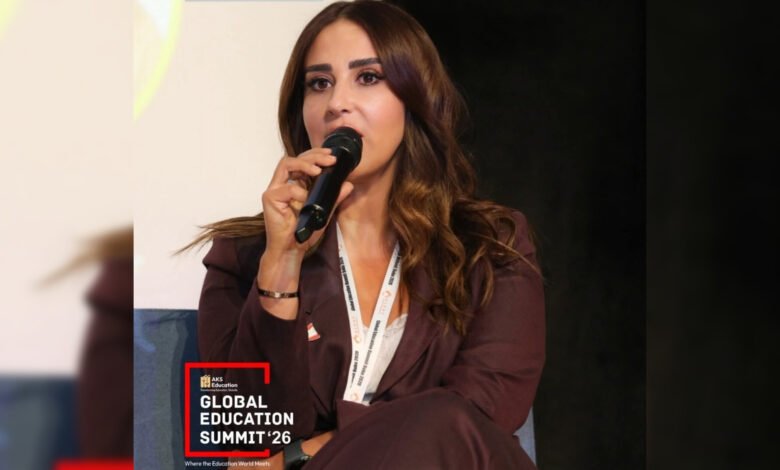
BAKU, AZERBAIJAN — September 2026 — Lebanese educationalist, teacher trainer, and AI-in-education practitioner Maha Shhadeh participated as a panelist at the Global Education Summit 2026 in Baku, Azerbaijan, contributing to an international conversation on one of the defining questions facing education today: How can technology enhance human potential without replacing human connection?
Held under the theme “Leading Education in the Age of AI, Innovation & Human Potential,” the summit brought together education professionals to explore how artificial intelligence, innovation, and emerging technologies are reshaping teaching, learning, and educational leadership.
Shhadeh contributed to the panel “Can Technology Enhance Human Potential Without Replacing Human Connection?”, bringing an educator-centered perspective grounded in AI literacy, teacher professional development, educational technology, and the practical integration of AI into learning environments.
Her growing presence within the international EdTech landscape has also been reflected in Favikon’s 2026 rankings, where Shhadeh was ranked #5 in Education & EdTech in the UAE and among the Top 200 EdTech voices worldwide.
Her message in Baku centered on a clear principle: the future of education should not be defined by choosing between technology and human connection, but by determining how technology can strengthen human potential while keeping educators and learners at the center.
From AI Adoption to Meaningful Educational Transformation
Artificial intelligence is rapidly changing what is possible in education.
Teachers can now use AI to support lesson planning, differentiate learning materials, develop classroom activities, generate formative feedback, and reduce time spent on repetitive tasks. Students have access to systems capable of explaining concepts, supporting research, generating ideas, and interacting with information in new ways.
But greater access to technology creates a more fundamental question:
What should education prioritize when information itself can be generated almost instantly?
For Shhadeh, the answer requires moving beyond simply introducing more AI tools into classrooms.
Schools need to develop the human capabilities required to use those tools critically, ethically, and purposefully.
Critical thinking, creativity, communication, judgment, curiosity, and the ability to evaluate information become increasingly important when producing an answer is easier than ever.
The challenge facing education is therefore not merely technological.
It is educational.
Why Human Connection Still Matters in AI-Enabled Education
The Baku discussion addressed a concern increasingly relevant to education systems worldwide: whether technological advancement can improve learning without weakening the relationships that make education meaningful.
AI can process information, personalize resources, generate explanations, and support many routine tasks.
But teaching extends far beyond information delivery.
A teacher recognizes uncertainty that may never appear in assessment data. Teachers understand context, build confidence, establish trust, encourage curiosity, and know when a student needs additional support or a greater challenge.
These interactions are not secondary to education. They are part of how meaningful learning happens.
For this reason, the strongest model for AI-enabled education is not one that minimizes the teacher.
It is one that uses technology to expand educators’ capabilities while preserving human judgment, responsibility, empathy, and connection.
From AI Tools to AI Literacy
A central focus of Shhadeh’s work is helping educators move beyond simply learning how to operate individual AI platforms toward developing genuine AI literacy.
For educators, AI literacy means understanding not only how to use artificial intelligence, but also when, why, and when not to use it.
It includes the ability to critically evaluate AI-generated information, recognize potential errors and limitations, design effective AI-supported learning experiences, protect academic integrity, and maintain appropriate human oversight.
Giving teachers access to an AI platform does not automatically create educational innovation.
Meaningful innovation happens when technology is connected to pedagogy, learning objectives, student needs, and measurable educational value.
Instead of beginning with the question:
“Which AI tool should we use?”
Shhadeh advocates for starting with a more important one:
“What learning problem are we trying to solve, and can technology strengthen the teacher’s ability to respond?”
That shift can help schools move from short-term experimentation toward sustainable and responsible AI integration.
The Teacher’s Role Is Evolving, Not Disappearing
As generative AI becomes increasingly capable, questions about the future role of teachers have intensified.
Yet greater technological capability does not diminish the importance of educators. It changes where their contribution becomes most valuable.
In AI-enabled learning environments, teachers increasingly become learning designers, mentors, facilitators of inquiry, critical evaluators, and ethical decision-makers.
They help students formulate better questions, distinguish credible information from unreliable output, develop independent judgment, collaborate effectively, and understand when technology should — and should not — be used.
In this context, AI does not eliminate the need for excellent teachers.
It raises the importance of excellent teaching.
Bringing a Lebanese Education Perspective to Baku
Shhadeh’s participation at the Global Education Summit also brought a Lebanese education perspective into the international conversation surrounding AI and the future of learning.
For Lebanon, as for education systems around the world, meaningful AI adoption requires more than access to emerging technologies.
Schools need teacher professional development, AI literacy, responsible-use frameworks, educational leadership, appropriate governance, and implementation models grounded in the realities of classrooms.
AI can potentially help educators create resources more efficiently, differentiate instruction, expand access to learning opportunities, and design new educational experiences.
But technology alone cannot create educational transformation.
Teachers must be prepared to evaluate it, contextualize it, and use it with purpose.
Investing in educators therefore remains one of the most important components of any long-term AI-in-education strategy.
Human-Centered Education in an AI-Powered World
The future of education should not be measured by how much technology enters a classroom.
A more meaningful measure is what that technology enables teachers and students to accomplish.
Does AI create more time for meaningful teacher-student interaction?
Does it help educators respond more effectively to different learner needs?
Does it encourage deeper thinking rather than simply faster answers?
Does it strengthen student agency?
And does it prepare learners to participate responsibly in a world where artificial intelligence will increasingly influence how people learn, work, communicate, and create?
These questions move the conversation beyond technology adoption toward human-centered educational transformation.
The strategic task ahead is therefore not simply to introduce AI into education, but to determine what responsible, effective, and human-centered AI integration should look like.
Through her participation at the Global Education Summit 2026 in Baku, Maha Shhadeh contributed an educator-focused perspective to that global conversation — one in which technological innovation and human connection are not competing priorities.
They must develop together.
Technology can expand what is possible. Education must determine what is valuable.
About Maha Shhadeh
Maha Shhadeh is a Lebanese educationalist, teacher trainer, and AI-in-education practitioner working at the intersection of artificial intelligence, educational technology, teacher professional development, and human-centered learning.
Recognized in Favikon’s 2026 rankings as #5 in Education & EdTech in the UAE and among the Top 200 EdTech voices worldwide, Shhadeh is building an international presence around the practical and responsible integration of artificial intelligence into education.
Her work focuses on translating emerging AI capabilities into meaningful educational applications while preserving teacher agency, critical thinking, responsible AI use, strong pedagogy, and human connection.
Through teacher training, educational initiatives, and participation in international education forums, she contributes to discussions surrounding AI literacy, EdTech, teacher development, educational innovation, and the future of education.
Her participation as a panelist at the Global Education Summit 2026 in Baku, Azerbaijan, forms part of this broader engagement, connecting a Lebanese educational perspective with the global conversation about how artificial intelligence can enhance human potential without replacing the relationships at the heart of learning.